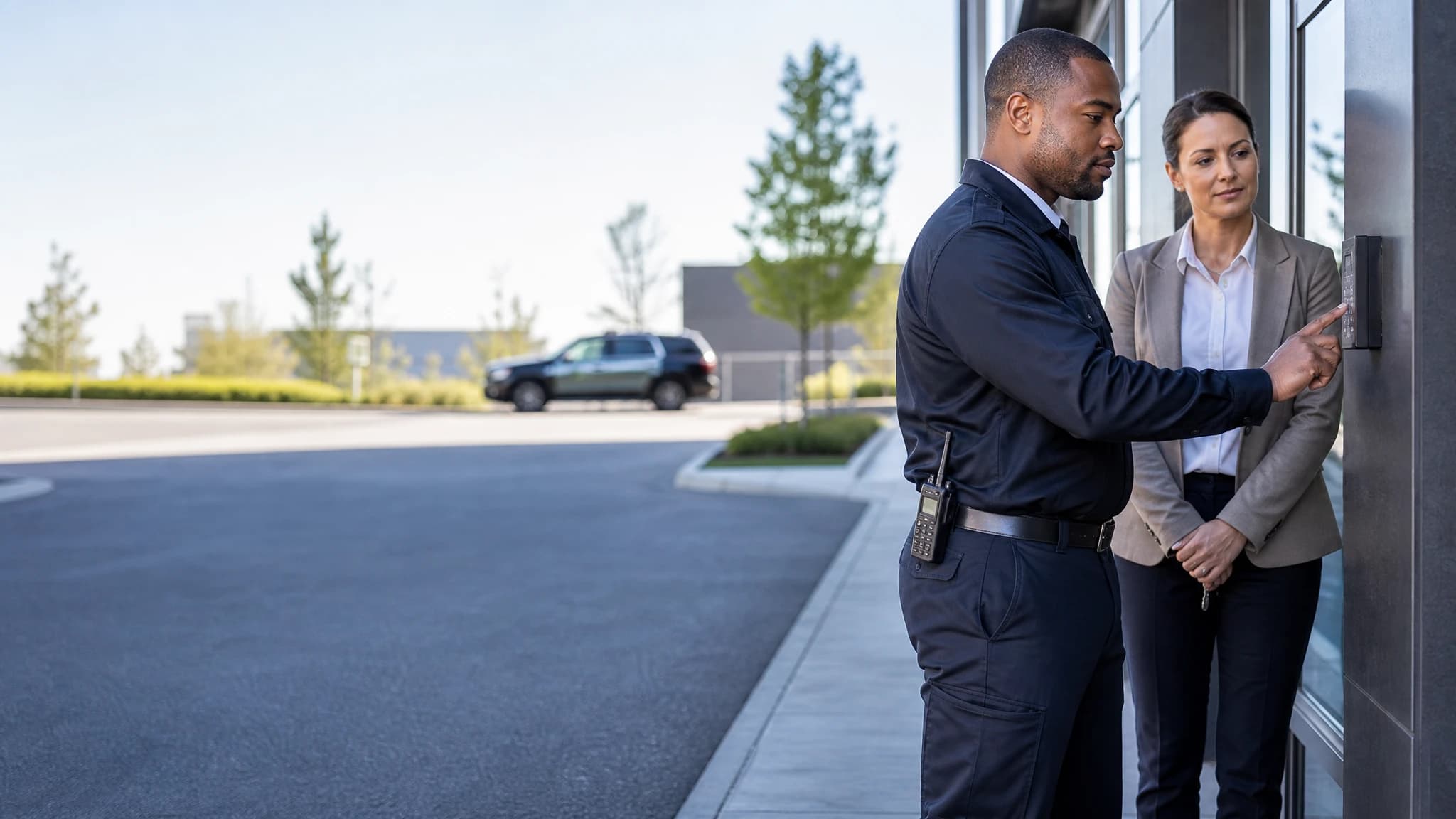
Mobile Patrol Security: How It Works and When It Makes Sense
Mobile patrol trades constant presence for broader coverage -- here's how it actually works, and when it's a smarter fit than a stationed guard.
In this guide
Quick takeaway
Mobile patrol trades continuous presence for broader coverage across multiple properties or a larger footprint, on a scheduled but randomized rotation -- it's a cost-effective fit when deterrence and periodic checks matter more than someone being on-site at all times.
Mobile patrol is built around a simple tradeoff: instead of one guard covering one spot continuously, a guard covers multiple properties or a much larger area on a scheduled rotation. Whether that's the right call depends entirely on what the property actually needs.
How mobile patrol actually works
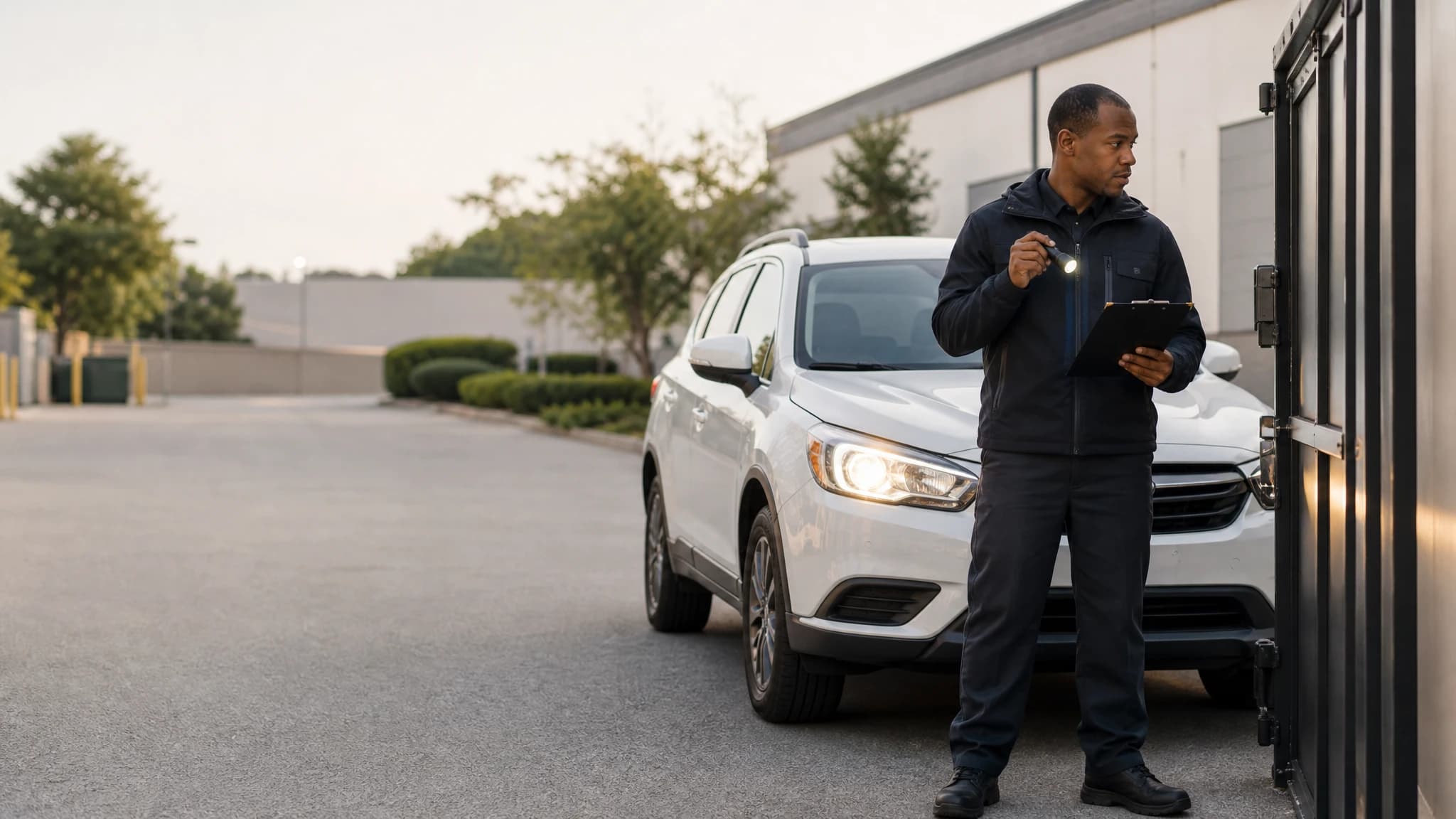
A patrol guard drives a set route -- sometimes covering a single large property, sometimes several smaller properties under one contract -- stopping at each to check specific points: doors, gates, common areas, anything flagged as a priority. Checks are typically logged with a time stamp per stop, and rounds are often randomized within a window rather than happening at the exact same minute every time, specifically so the schedule isn't predictable to anyone watching for a pattern.
When mobile patrol makes more sense than a stationed guard
- Multiple smaller properties where a full-time guard at each isn't justified, but regular checks still matter.
- Large single properties where the actual risk is spread across the whole footprint rather than concentrated at one entrance.
- Overnight or off-hours coverage, where a property doesn't need someone on-site the whole time, just checked on a regular schedule.
- Budget-conscious coverage for properties that need a deterrent presence without the cost of continuous staffing.
What mobile patrol can't do
A patrol guard isn't present between checks -- if a property needs someone available immediately, at any moment, mobile patrol isn't the right fit on its own. Some properties combine both: a stationed guard for continuous presence at a key point, plus mobile patrol covering the rest of a larger footprint.
What good patrol documentation looks like
The actual proof of coverage is the log -- ask a prospective provider what their reporting looks like, and whether you get visibility into it (a portal, a report, something concrete) rather than just a verbal assurance that checks are happening.
A quick way to decide
If your main need is deterrence and periodic verification across a broad area, patrol is usually the more cost-effective fit. If your main need is someone available on-site at all times, a stationed guard (possibly combined with patrol for the rest of the property) is the better starting point.
ASIS International covers patrol and documentation standards used broadly across the industry, and general workplace safety context is available from OSHA.
Frequently Asked Questions
How is mobile patrol different from a stationed guard?
Are mobile patrol rounds predictable?
Can mobile patrol cover multiple properties under one contract?
Is mobile patrol enough for a property that needs someone available immediately?
How is mobile patrol coverage actually documented?
Ready to find security?
Find the right security company for your needs
Compare licensed security providers or create a quote request and let us help match you with suitable companies.