Bodyguard and Personal Protection Services: What's Actually Involved
Personal and executive protection is one of the most misunderstood security services -- here's what the work actually involves, and who genuinely needs it.
In this guide
Quick takeaway
Personal protection is mostly advance planning and discretion, not the dramatic physical presence movies suggest -- de-escalation comes first, and a visible security presence can actually work against the client it's meant to protect.
Personal protection gets a lot of its public image from movies, which is exactly why the real version of the job tends to surprise people -- it's far more about planning and discretion than physical presence.
What the work actually involves
- Advance planning, reviewing a route or venue before the client arrives to identify actual risks, not just showing up and reacting.
- Discreet, close-proximity coverage, positioned to respond immediately without drawing attention to the client.
- Secure transportation coordination, timing arrivals and departures to minimize exposure.
- Situational awareness, constantly reading a space for anything that doesn't fit, well before it becomes a problem.
- De-escalation first, physical intervention as a last resort, not the default approach.
Who actually uses personal protection
This isn't just a service for celebrities. Business executives during sensitive negotiations or public disputes, individuals facing a documented and credible threat, high-net-worth individuals during travel, and public figures at specific events all use personal protection for genuinely practical reasons, usually for a defined period rather than permanently.
Why discretion matters as much as protection
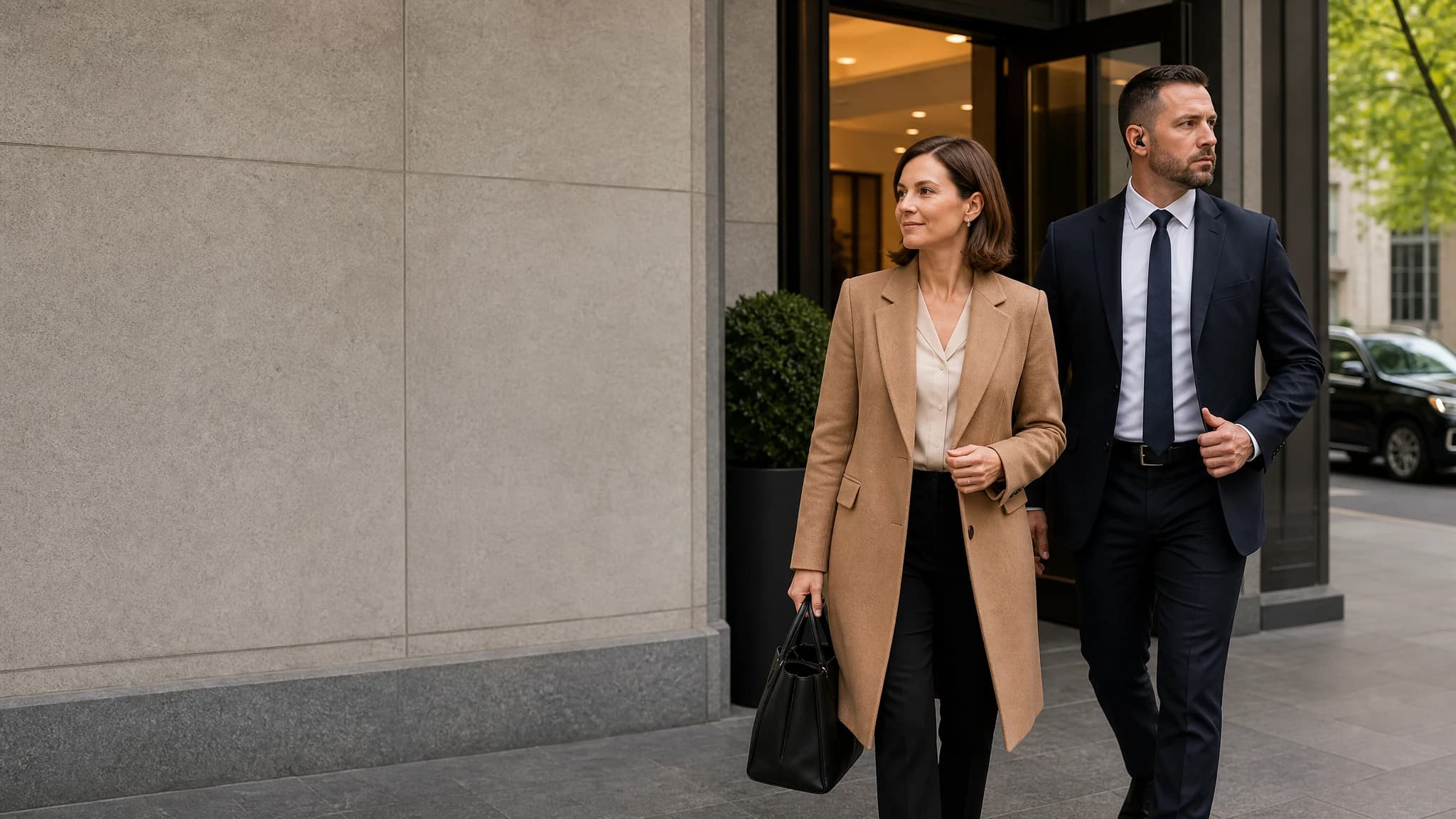
A visibly obvious security presence can actually work against the client -- drawing attention, signaling vulnerability, or making normal business and social interactions harder. Good personal protection is often designed to be almost invisible to everyone except the agent doing the job, dressed and positioned to blend into the environment rather than stand out from it.
What to ask a provider
- What's their advance-planning process -- do they actually scout a location beforehand, or just show up?
- What's their experience with situations like yours specifically (executive travel, public events, a specific threat)?
- How do they handle communication and coordination with the client's existing staff or schedule?
Setting realistic expectations
Personal protection reduces risk; it doesn't eliminate it, and a provider who promises otherwise is overselling. A serious provider will talk through realistic scenarios and planning rather than making the service sound like a guarantee.
ASIS International publishes widely referenced standards for executive and personal protection professionals, offering a useful benchmark when evaluating a provider's training.
Frequently Asked Questions
Is personal protection only for celebrities?
Does personal protection mean a visibly large security presence?
What does 'advance work' mean in personal protection?
Can personal protection guarantee safety?
What should I ask a personal protection provider before hiring?
Ready to find security?
Find the right security company for your needs
Compare licensed security providers or create a quote request and let us help match you with suitable companies.