Fire Watch Security: When You Need It and What It Involves
When a building's fire system is impaired or a job site has elevated fire risk, fire watch security fills the gap -- here's when it's required and what a real fire watch actually looks like.
In this guide
Quick takeaway
Fire watch is required whenever a building's fire alarm or sprinkler system is impaired, and it means documented, hourly walkthroughs -- not a guard standing near the entrance. Duration is tied to how long the repair takes, from a few hours to several weeks.
Fire watch security gets called in for a specific reason: something about a building's fire protection has a gap, and until that gap is fixed, someone has to physically stand in for the system that isn't working.
When fire watch is actually required
The most common trigger is an impaired fire alarm or sprinkler system -- if it's down for repair, testing, or construction, most fire codes and insurance policies require a documented fire watch until it's back online. Active construction sites with elevated fire risk (welding, temporary heat sources, flammable materials staged on-site) are the other major category. Occupancy type matters too -- a hospital or high-rise with an impaired system typically faces a stricter fire watch requirement than a low-occupancy warehouse.
What a fire watch guard actually does
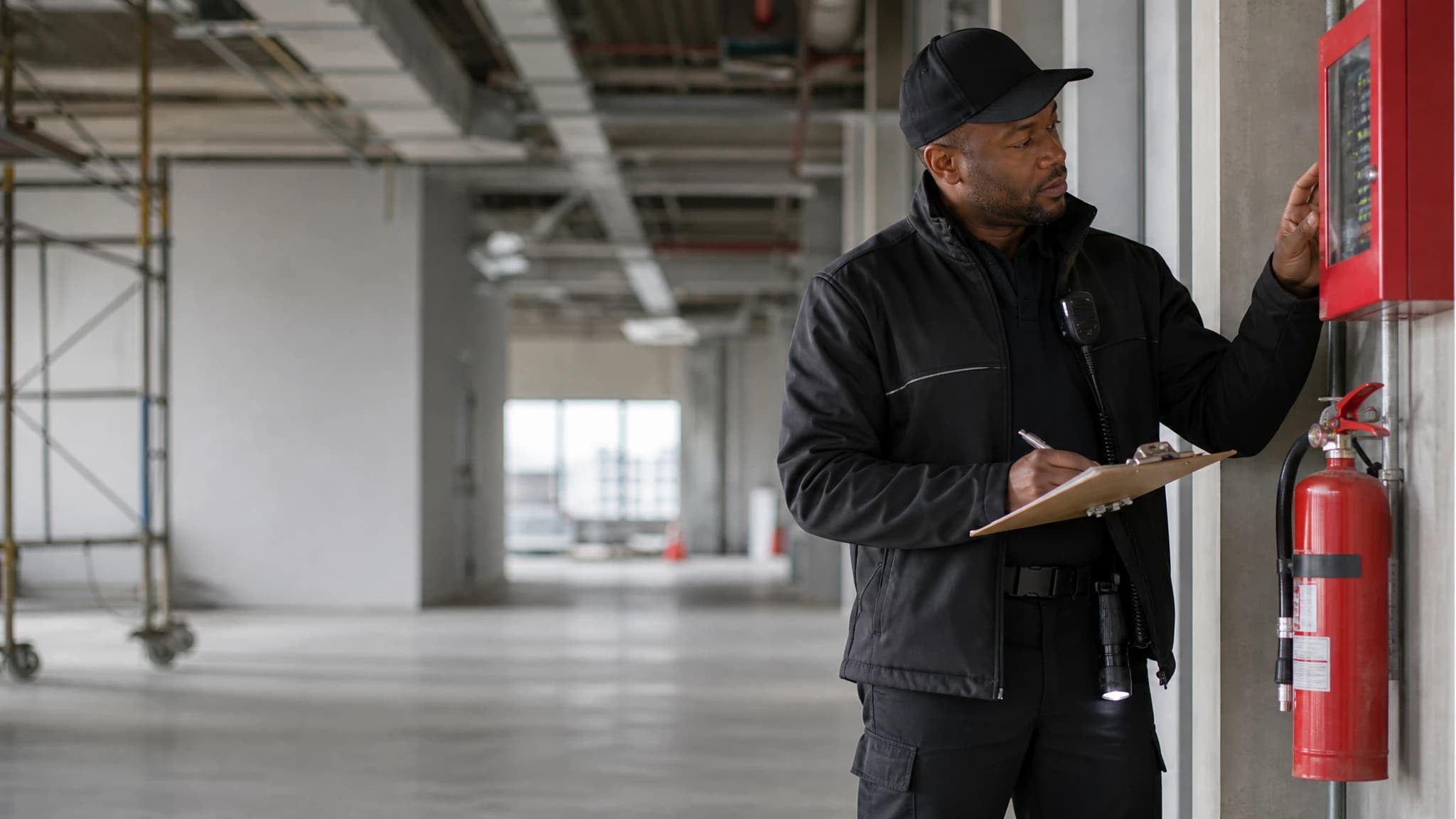
This isn't a guard standing by a door. A real fire watch is an active, documented patrol:
- Scheduled walkthroughs, typically on a set interval (often hourly), covering every area affected by the impairment.
- Checking for fire hazards directly -- blocked exits, propped-open fire doors, unauthorized use of open flame or heat sources.
- Carrying the means to raise an alarm and, in some jurisdictions, fire extinguishing equipment appropriate to the space.
- Logging every round -- time, route, and what was checked. This log is the actual deliverable; without it, the fire watch didn't legally happen even if a guard was technically present.
What good documentation looks like
If you're the one requiring proof of fire watch coverage (for an inspector, an insurer, or your own compliance file), ask specifically for the patrol log format before coverage starts -- time-stamped entries per round, not just a start/end time for the shift. A provider who can't describe their logging process clearly hasn't done this before, which matters more here than almost any other type of coverage, since the paperwork is often the whole point.
How long fire watch coverage typically lasts
Duration is tied entirely to how long the underlying issue takes to fix -- a few hours for planned system testing, or weeks for a major sprinkler retrofit. Because of that, fire watch is one of the few security services genuinely priced and staffed as short-notice, variable-duration coverage rather than a standing contract. If a provider can't mobilize on short notice, that's worth knowing before an actual impairment happens, not during one.
And to be clear: this is the one guard post where "just walking around looking alert" is, quite literally, most of the job description -- just make sure it's the documented kind, not the vibes-based kind.
Fire watch requirements are typically set by your local fire marshal or authority having jurisdiction, in line with standards published by the National Fire Protection Association. For general workplace fire safety context, OSHA is a useful reference as well.
Frequently Asked Questions
Who decides if a building needs a fire watch?
How often do fire watch rounds need to happen?
Can any security guard perform a fire watch?
What happens if a fire watch isn't properly documented?
How quickly can fire watch coverage be arranged?
Ready to find security?
Find the right security company for your needs
Compare licensed security providers or create a quote request and let us help match you with suitable companies.