How Many Security Guards Does Your Property Need?
There's no single right number -- but property size, entrances, hours of operation, and risk level get you to a realistic guard count fast. Here's the math and real examples by property type.
In this guide
Quick takeaway
Start with one guard per continuously staffed post, add a guard for each extra access point, multiply by shifts, then build in a margin for callouts. Most small properties need just one guard per shift -- multiple simultaneous entrances, high foot traffic, or elevated risk are what actually justify adding more.
How many security guards does a property actually need? As a starting point, most single-entrance commercial properties are adequately covered by one guard per shift, scaling up from there based on square footage, number of entrances, hours of operation, and risk level. There's no universal formula that fits every property, but the factors below get you to a realistic number faster than guessing.
What actually determines the number
- Square footage and layout. A single open floor a guard can see across needs less coverage than a sprawling property with blind spots.
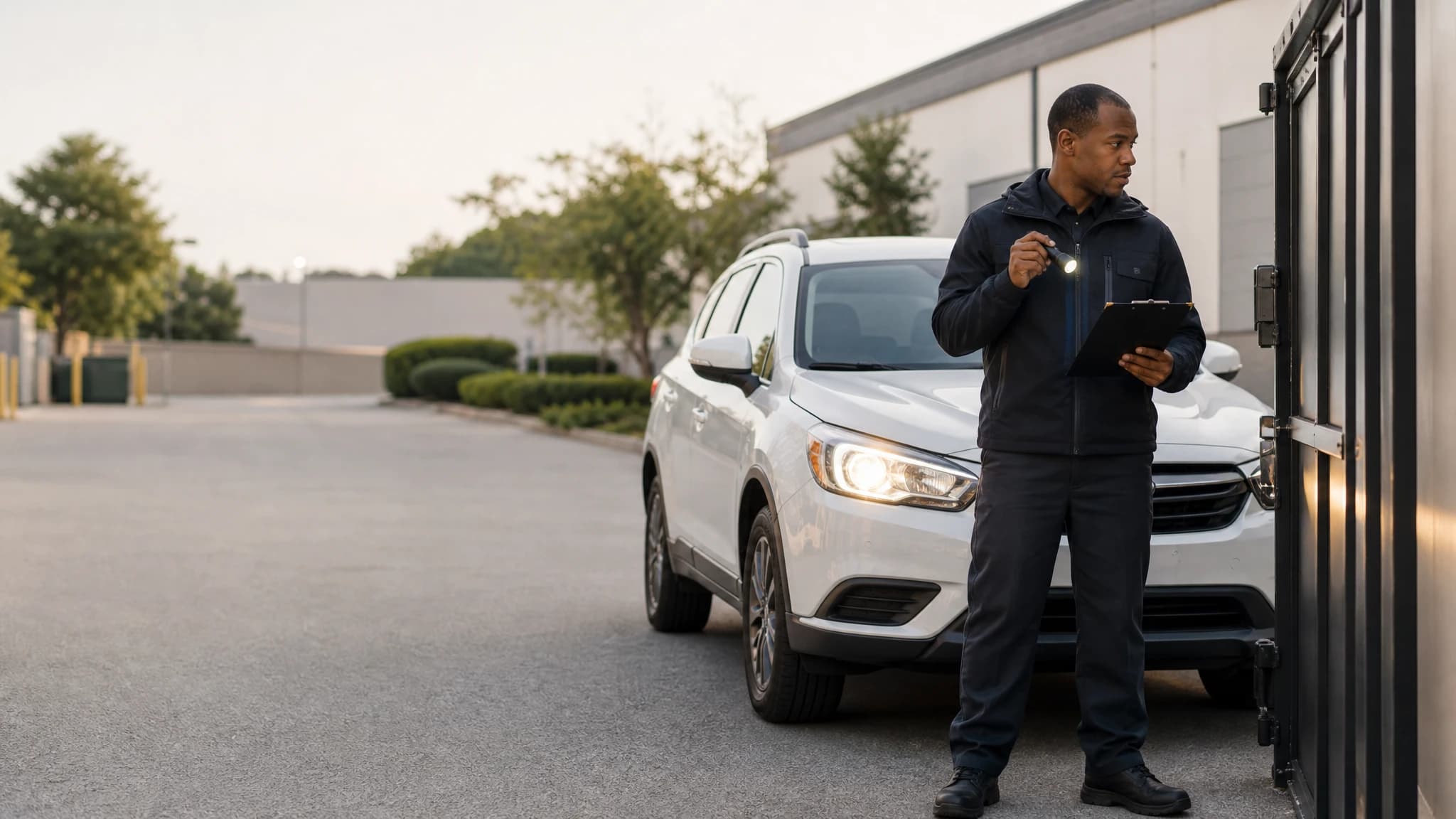
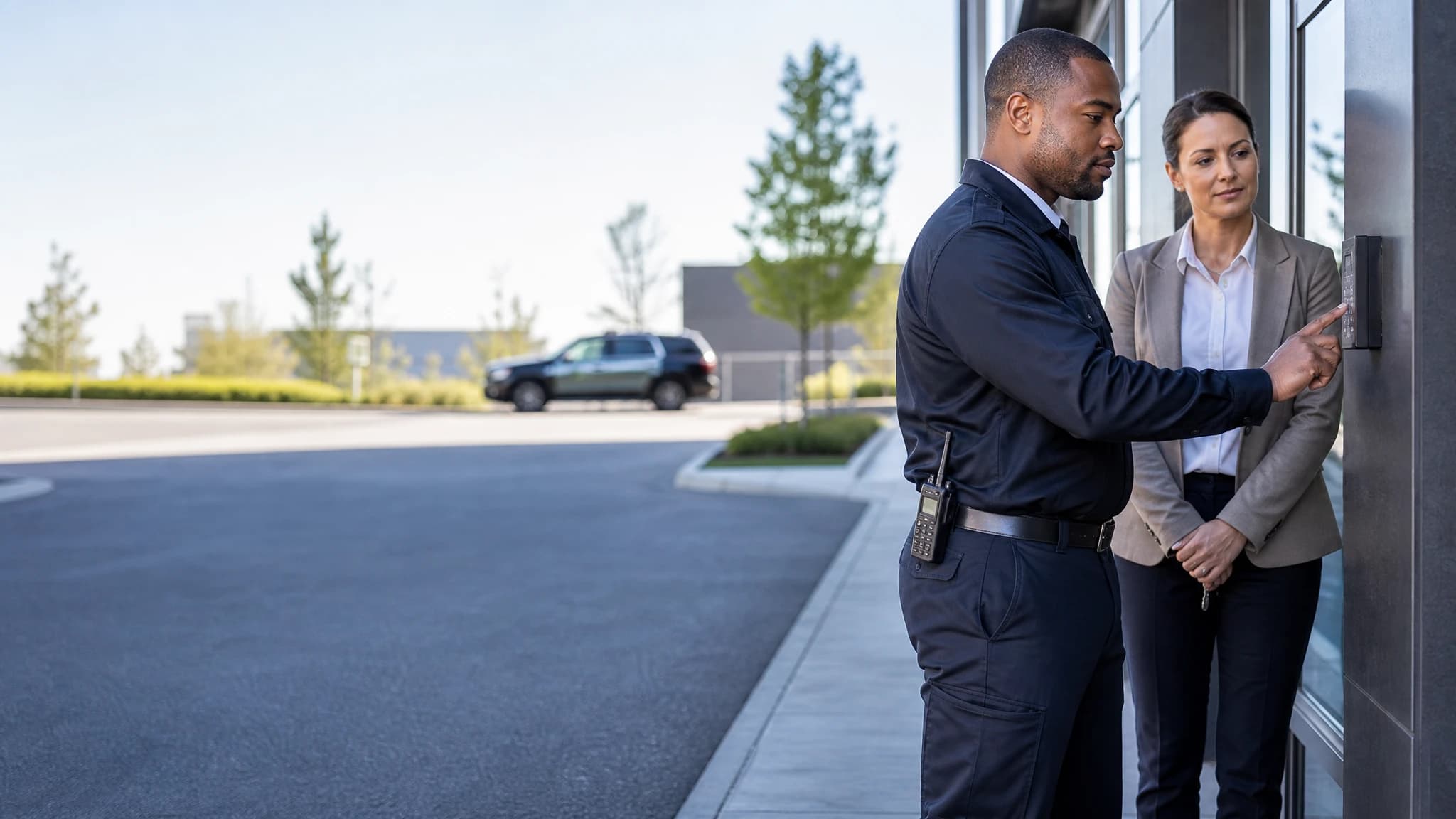
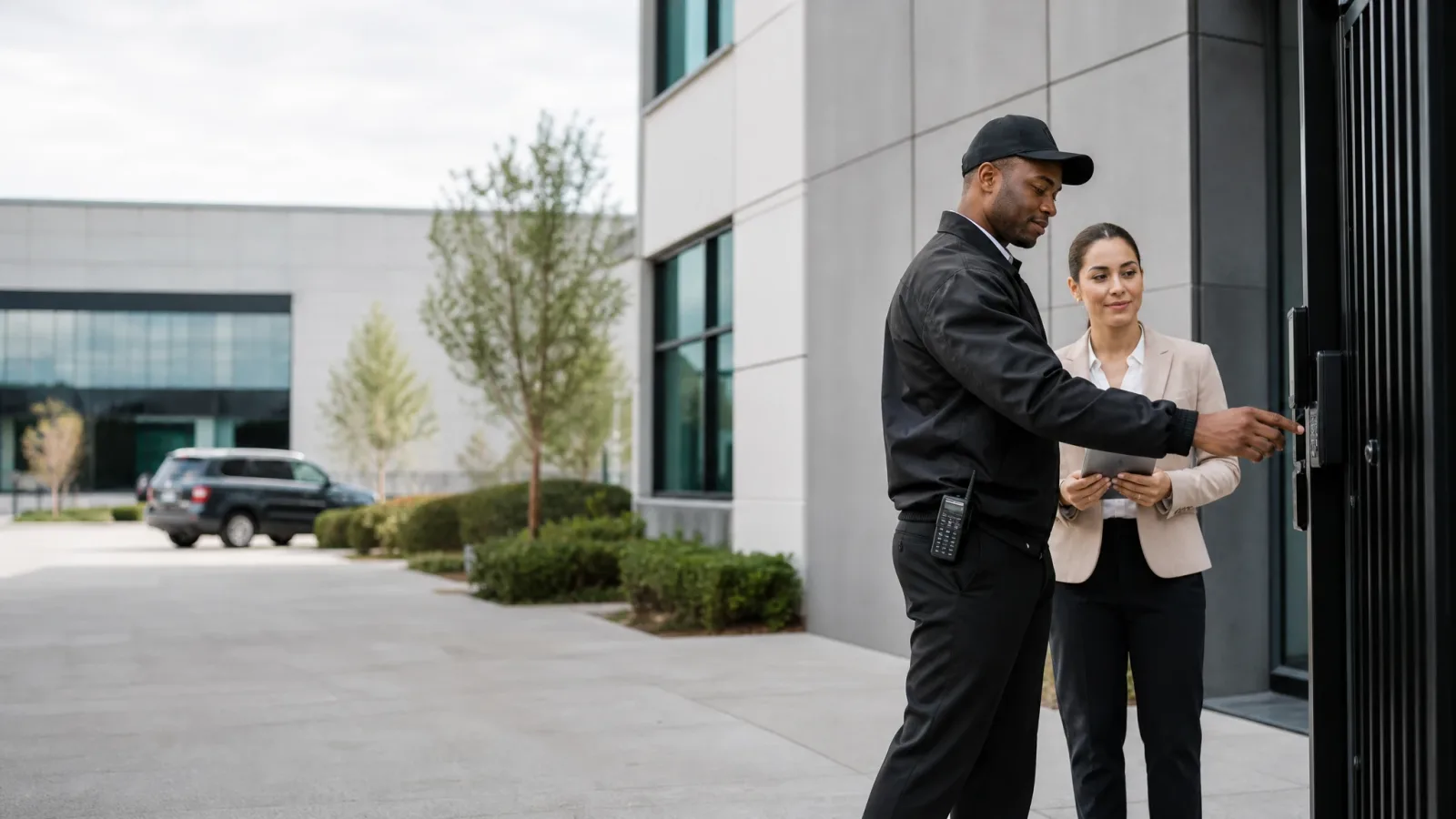
- Number of entrances and access points. Every additional door, gate, or loading dock that needs monitoring is effectively a second post to staff.
- Hours of operation. A property that's occupied and busy 12 hours a day has different needs than one that's empty except for a night shift.
- Risk level. Cash-handling businesses, high-value inventory, and properties with a documented history of incidents justify more coverage than a low-risk office.
- Coverage type. A stationed guard covers one point continuously; mobile patrol covers more ground on a rotation, which changes the math entirely.
A simple starting formula
- Start with one guard per continuously staffed post you need covered at any given moment -- a main entrance, a reception desk, a gate.
- Add a guard for every additional access point that needs simultaneous coverage, not sequential patrol.
- Multiply by the number of shifts your hours of operation require (a 24-hour property needs at least 3 shifts of guards, not 3 guards total).
- Add a margin for callouts and time off -- most security companies staff slightly above the bare minimum specifically so a single absence doesn't leave a post uncovered.
This gets you to a realistic starting number. A licensed security company can refine it further once they've actually seen the property.
Real examples by property type
- Small retail store, single entrance: Often one guard per shift is enough, sometimes supplemented by mobile patrol during closed hours.
- Office building with a staffed lobby: One guard for access control, plus patrol coverage (either a second guard or scheduled mobile patrol) for stairwells, parking, and other floors.
- Apartment complex with a gated entrance: Coverage often centers on overnight hours specifically, since that's when most incidents happen and daytime staff presence is lower.
- Large event venue: Guard count scales directly with expected attendance and the number of entrances, often reaching a dozen or more staff for a single event -- see our event security guide for how that gets calculated.
- Warehouse or distribution center: Frequently combines a smaller stationed team with regular patrol coverage of the full footprint rather than trying to staff every corner continuously.
When one guard is genuinely enough
A single guard makes sense when there's one real access point to control, occupancy is moderate, and the risk level doesn't call for redundancy. Plenty of small commercial properties are correctly and safely covered by one well-trained, well-supervised guard per shift -- more isn't automatically better if the actual risk doesn't call for it.
When you need more than one guard per shift
Multiple simultaneous access points, high foot traffic, an elevated risk profile, or a property large enough that one person genuinely can't maintain awareness of it all are the real triggers for adding guards -- not a feeling that more coverage is always safer. Adding headcount without a specific reason mostly just adds cost.
Getting a number that actually fits your property
A licensed security company can walk your specific property and give you a real recommendation rather than a generic formula -- worth doing before you commit to a staffing level based on guesswork. Industry guidance from organizations like ASIS International, the leading professional association for security management, and general workplace safety context from OSHA can also help inform the conversation, particularly for higher-risk or regulated properties.
If you're ready to figure out the right number for your property, you can compare licensed security companies serving your area, or build a quote list to get a staffing recommendation and pricing from a few providers at once.
Frequently Asked Questions
Is one security guard enough for a small business?
Do parking lots need their own dedicated guard?
How many guards does a 24-hour property need in total?
Can mobile patrol replace having multiple stationed guards?
How do I know if a property is overstaffed on security?
Should guard count be revisited over time?
Ready to find security?
Find the right security company for your needs
Compare licensed security providers or create a quote request and let us help match you with suitable companies.