Armed vs. Unarmed Security Guards: Which Does Your Property Need?
The real difference between armed and unarmed security guards isn't just the firearm -- it's training, cost, insurance, and what kind of risk your property actually has. Here's how to make the call.

In this guide
Every property owner comparing guard services eventually hits the same question: armed or unarmed? It's tempting to treat "armed" as simply the more serious option, but that's the wrong way to think about it. Hollywood has trained a lot of us to assume "more important building, more guns" -- a fun rule for an action movie, a bad way to actually budget for security. The right choice comes down to matching the guard's role to your property's actual risk, not picking the option that sounds more protective on paper.
What unarmed guards actually do
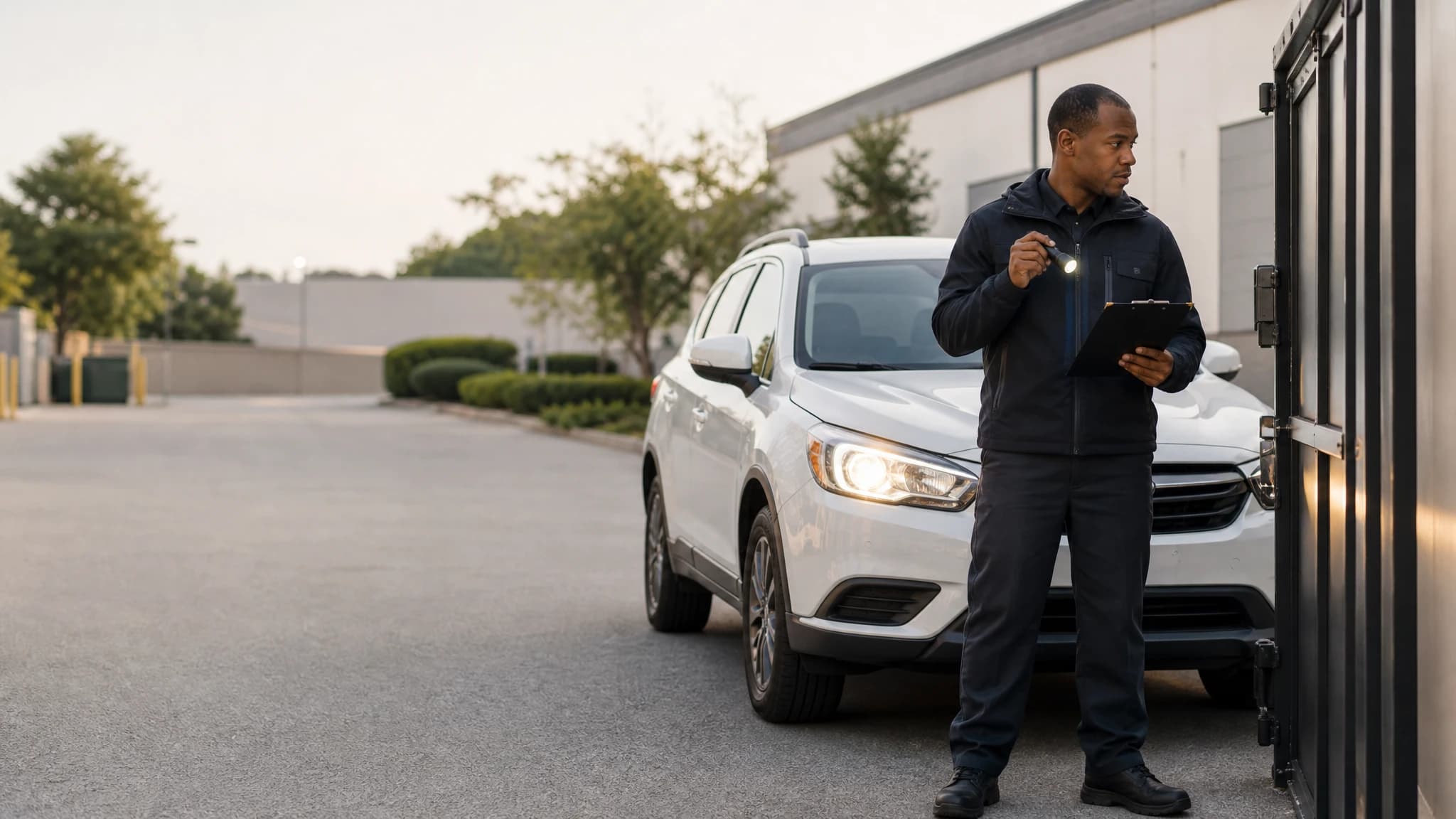
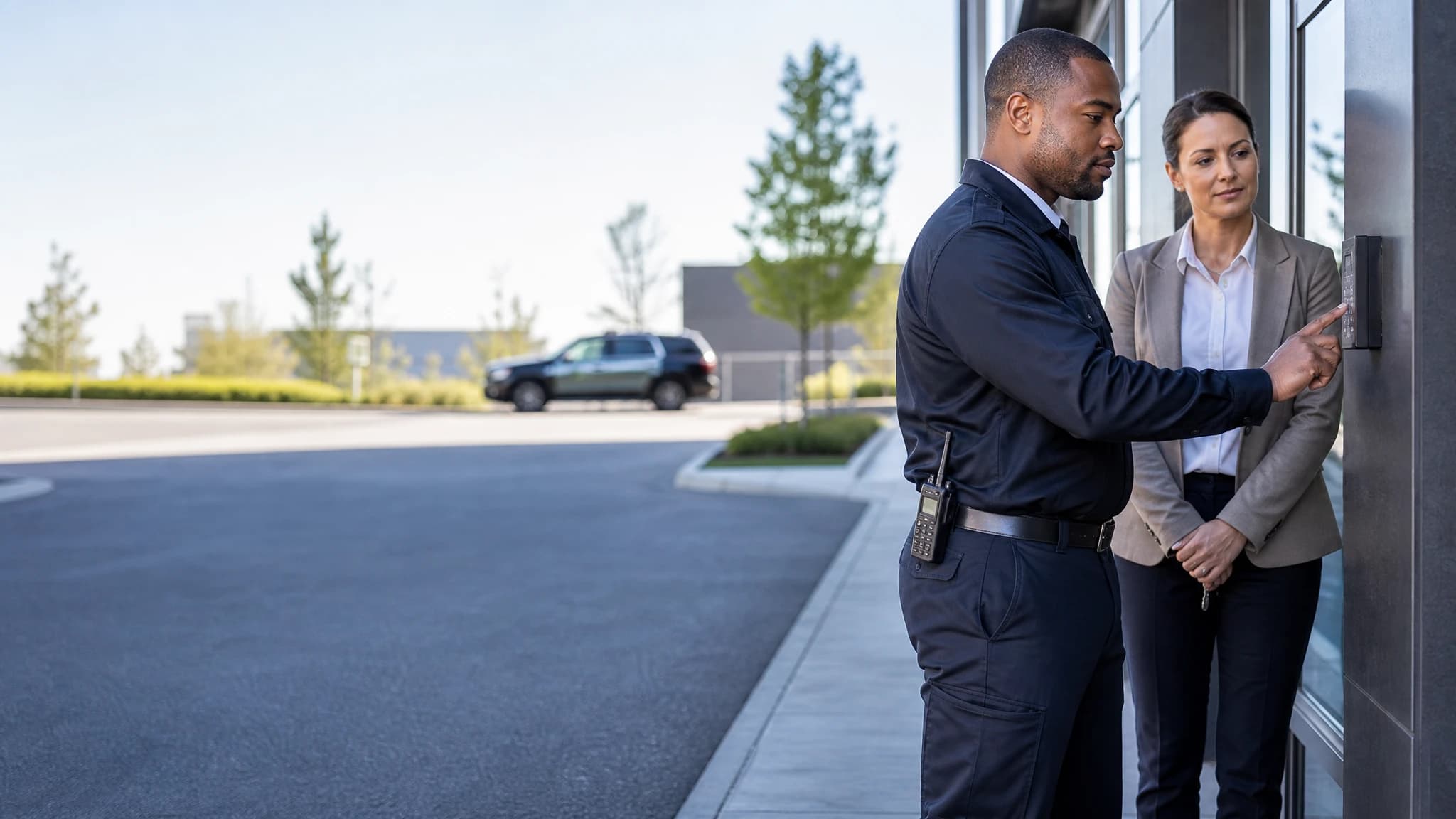
Unarmed security is the standard for most commercial and residential properties: office buildings, apartment communities, retail stores, warehouses, and general event staffing. Their role centers on visible presence, access control, monitoring, and incident reporting -- deterring problems and responding calmly if something happens, without carrying a firearm. For the large majority of properties, this is the appropriate and sufficient level of coverage.
What armed guards add
Armed guards go through additional firearms training, permitting, and licensing on top of standard guard requirements, and they typically cost more per hour as a result. Armed coverage tends to make sense for properties with a genuinely elevated risk profile: cash-handling businesses, high-value asset protection, certain healthcare or high-security facilities, or situations where a documented, specific threat exists. It's a higher level of response capability, and it should be reserved for situations that actually call for it.
The question that actually matters
Instead of asking "should we go armed to be safe," ask: what is the specific risk we're protecting against, and does an unarmed guard's role -- presence, monitoring, and reporting -- adequately address it? For most properties, the honest answer is yes. Adding armed coverage without a clear, specific reason doesn't just cost more; it can also create liability and insurance complications that a property owner didn't sign up for.
A quick way to think about it
- Standard office, retail, or residential property, no specific threat: unarmed is almost always the right fit.
- Cash-heavy business, high-value assets, or a documented specific threat: worth a conversation about armed coverage with a licensed provider.
- Not sure: that's a completely normal place to start. A licensed security company can walk through your property's actual risk with you rather than defaulting to whichever option sounds safer.
One thing both options have in common
Armed or unarmed, licensing is non-negotiable either way. An unlicensed unarmed guard is just as much of a problem as an unlicensed armed one -- confirm the company's license is active before anything else, regardless of which type of coverage you choose.
If you're weighing your options, you can compare licensed security companies and ask directly which coverage type fits your property, or build a quote list to get input from a few providers before deciding.
Ready to find security?
Find the right security company for your needs
Compare licensed security providers or create a quote request and let us help match you with suitable companies.