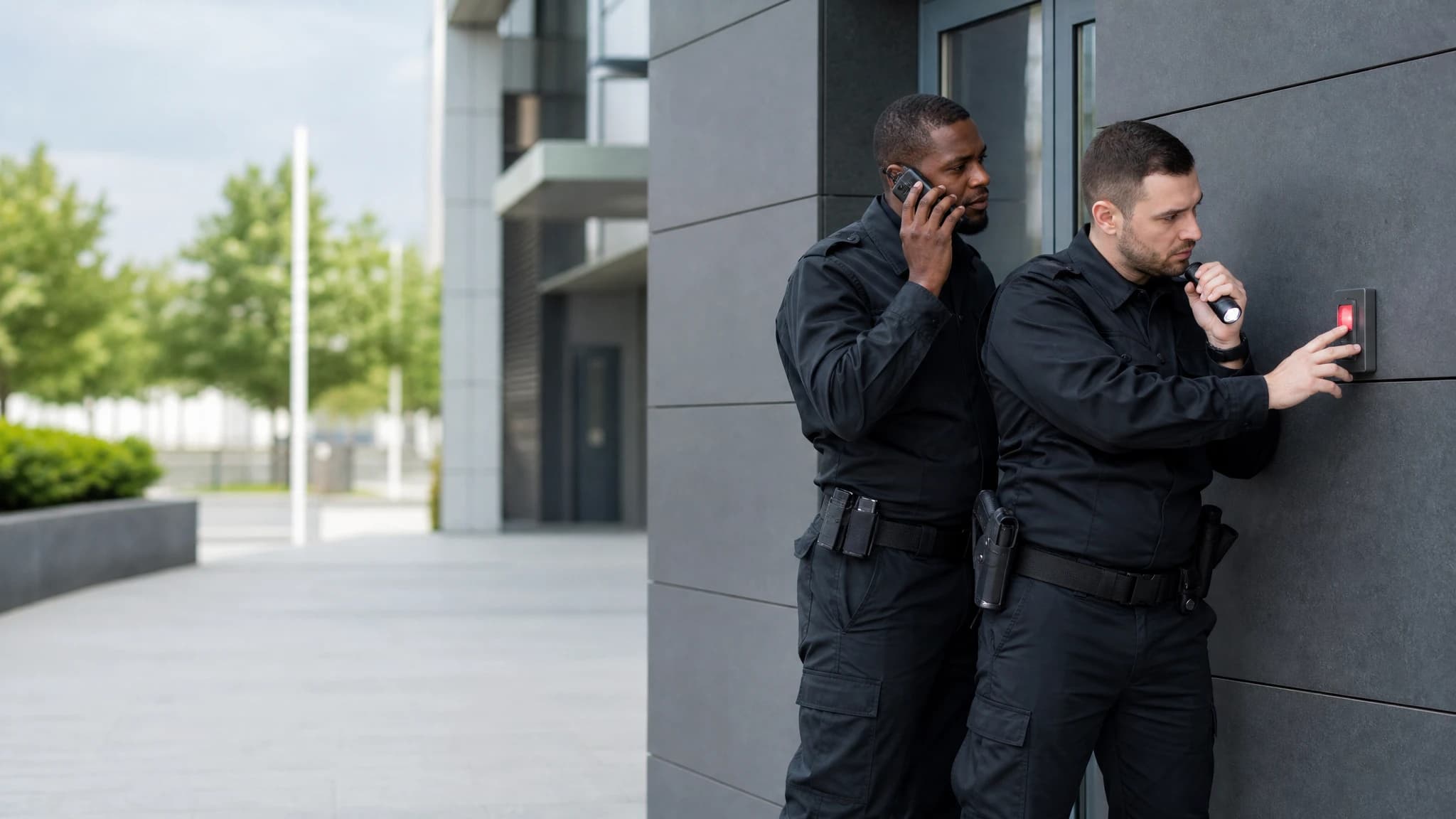
Workplace Violence Prevention: What Security's Role Actually Is
Workplace violence prevention is mostly about policy, training, and process -- security's role is real but specific, and it's worth understanding where it fits before assuming a guard alone solves the problem.

In this guide
Quick takeaway
Security coverage is one part of workplace violence prevention, not the whole plan -- policy, HR processes, and staff training matter as much, and most incidents involve someone already known to the workplace, not a stranger.
Workplace violence prevention gets treated, sometimes, as a problem you solve by hiring a guard. In practice, security coverage is one part of a broader prevention plan, and understanding where it actually fits helps set realistic expectations.
What security's role actually covers
- Access control, limiting who can physically enter a workplace, which matters most for incidents involving someone with no legitimate reason to be there.
- Presence and deterrence, a visible security function that changes the calculus for some potential incidents.
- Trained response, having someone on-site who's specifically prepared to respond to an escalating situation, including de-escalation as the first approach.
- Documentation and threat reporting, creating a real record when concerning behavior is reported, which matters for both prevention and any later legal or HR process.
What security's role does NOT cover on its own
Most workplace violence incidents involve someone already known to the workplace -- a current or former employee, not a stranger walking in off the street. That means policy (how concerning behavior gets reported and handled), HR processes (particularly around terminations and disciplinary actions, which is its own specific risk period worth planning for directly), and training for staff to recognize warning signs all matter as much as, or more than, physical security coverage.
Why termination and separation situations deserve specific planning
Employee separations, particularly involuntary ones, are a well-recognized elevated-risk period. Some organizations bring in security specifically for a termination meeting or the surrounding period -- not because every separation is dangerous, but because having a plan for the ones that could be is part of a genuinely serious prevention approach, not an overreaction.
Building a real prevention plan
A workplace violence prevention plan that's just "we have a security guard" is incomplete. A more complete plan includes a clear reporting process for concerning behavior, HR and management training on warning signs, a specific protocol for higher-risk situations like terminations, and security coverage integrated into that plan rather than standing apart from it.
What to ask a security provider
- Do they offer consultation on workplace violence prevention planning, not just guard staffing?
- What's their experience with higher-risk situations like terminations or known threats?
- How do they coordinate with HR and management during a planned higher-risk situation?
OSHA publishes general workplace violence prevention guidance that pairs well with a security provider's own recommendations, and ASIS International covers broader threat-assessment standards.
Frequently Asked Questions
Does hiring a security guard solve workplace violence risk?
What role does security actually play in prevention?
Why do terminations get flagged as higher-risk situations?
What does a complete workplace violence prevention plan include?
Should security be involved in planning, not just staffing?
Ready to find security?
Find the right security company for your needs
Compare licensed security providers or create a quote request and let us help match you with suitable companies.