Healthcare Facility Security: Balancing Access and Safety
Hospitals and healthcare facilities need to stay genuinely open to patients and families while managing real safety risk -- here's what coverage typically looks like in practice.
In this guide
Quick takeaway
Healthcare security has to stay open to people in genuine distress while managing real risk -- most incidents involve someone frightened or in crisis, not someone with hostile intent, which is why de-escalation training matters more here than almost anywhere else.
Healthcare security faces a tension most other property types don't deal with in the same way: a hospital has to stay open and accessible to people in genuine distress, around the clock, while managing real safety risks that come with exactly that kind of open access.
What coverage typically includes
- Emergency department coverage, often the highest-need area given the volume of stressed, sometimes volatile situations that pass through it.
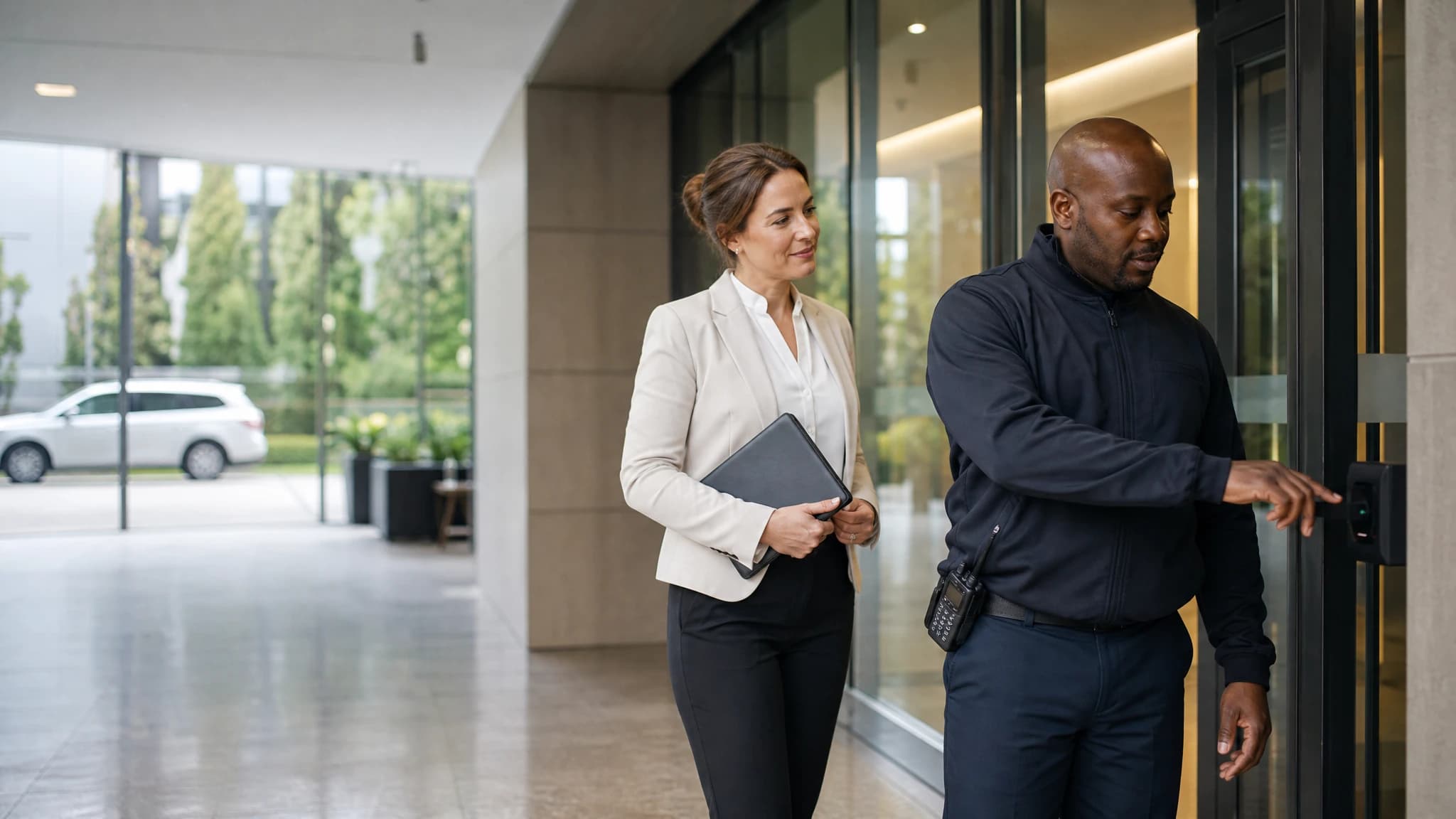
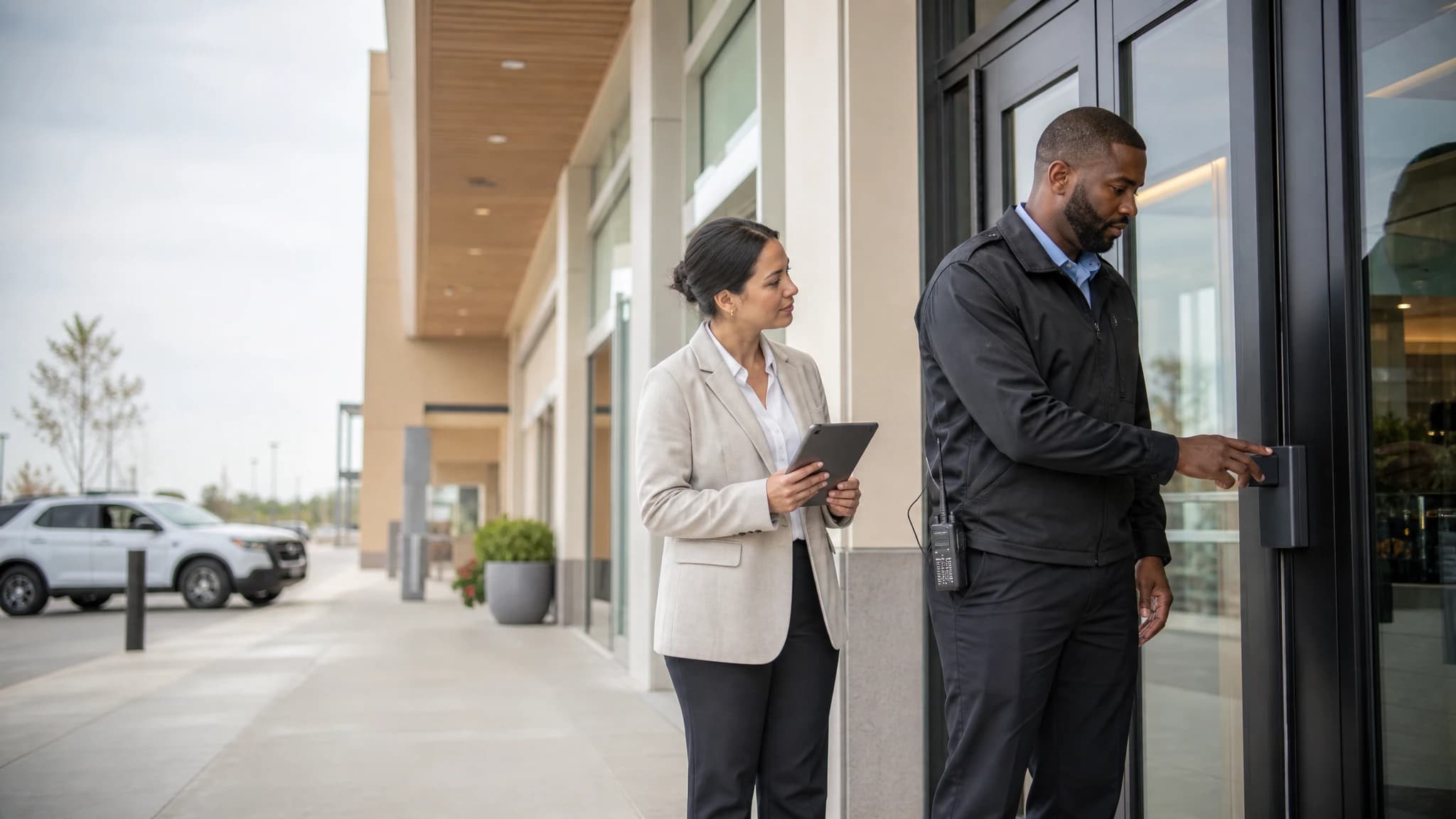
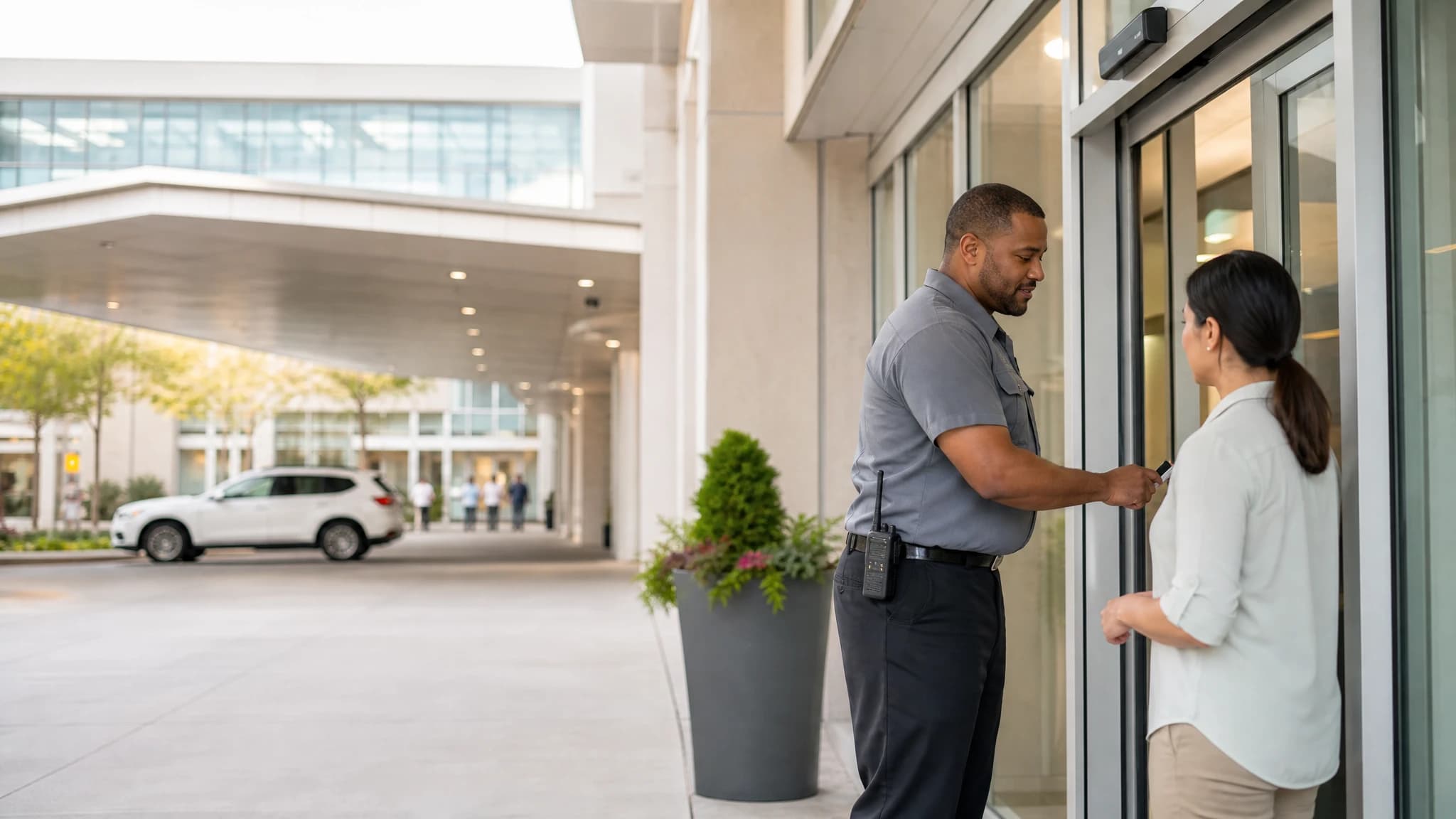
- Access control across a large, complex facility, balancing patient and family access with restricting non-clinical areas.
- Patrol of parking structures and campus grounds, particularly for facilities with large parking footprints and shift workers coming and going at all hours.
- De-escalation-focused response, since many healthcare security incidents involve a person in genuine medical or psychological distress rather than a straightforward security threat.
- Coordination with clinical staff, since security and clinical response often need to work together in the same incident.
Why de-escalation training matters more here than almost anywhere else
A large share of incidents in a healthcare setting involve someone who's frightened, in pain, or in a mental health crisis -- not someone with hostile intent. Security staff trained specifically for healthcare environments approach these situations differently than general commercial guard training would prepare them for, and that training gap is one of the more consequential things to check before hiring.
Balancing openness with real safety needs
A healthcare facility that locks down too aggressively creates real harm -- delaying care, alienating patients and families, and undermining the trust the facility depends on. Good healthcare security is calibrated specifically to stay out of the way of legitimate care while still managing genuine risk, which is a different skill set than standard commercial access control.
Coordinating with clinical and administrative staff
Security in a hospital setting works best as an extension of the care team, not a separate function bolted on -- clear protocols for when clinical staff call for security support, and security staff who understand basic healthcare environment norms, make a measurable difference in how incidents actually get handled.
What to ask a provider
- What specific healthcare or de-escalation training do their guards receive?
- What's their experience with emergency department coverage specifically?
- How do they coordinate with clinical staff during an active incident?
The International Association for Healthcare Security and Safety sets training standards specific to healthcare environments, and ASIS International covers broader physical security practices that apply as well.
Frequently Asked Questions
Why is healthcare security different from standard commercial security?
Are most healthcare security incidents violent in nature?
Is the emergency department the highest-need area for coverage?
Does healthcare security coordinate with clinical staff?
What training should healthcare security guards have beyond standard guard training?
Ready to find security?
Find the right security company for your needs
Compare licensed security providers or create a quote request and let us help match you with suitable companies.